
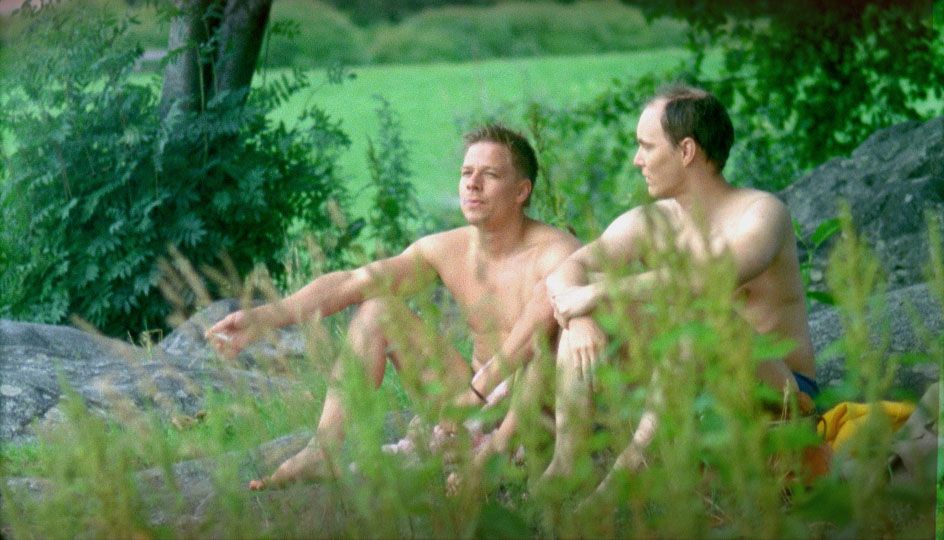
Memory of Tomorrow
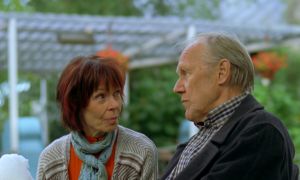
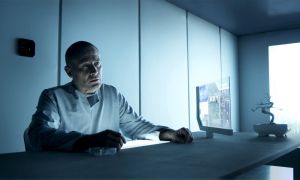
There are two great loves in the life of old Aleksi: his wife Saila and The Camera. After the sudden death of his wife, Aleksi participates in a medical experiment prolonging his life far beyond its natural end. In 2142 Aleksi is still alive, but although his memories of the past have been recorded in photographs and on film, they won’t revoke the same feelings anymore.
MEMORY OF TOMORROW, 23:30 (for internet), TAMK 2010
Cast: Heikki Nousiainen, Eija Nousiainen, Jukka-Pekka Palo, Ilkka A Jokinen, Aleksi Lavaste, Seppo Paajanen
Director: Pekka Saari, Written by: Pekka Saari & Ville Paajanen, Producer: Sanna Kantola
Cinematographer: Ossi Käki, Editor Helena Ylikyyny, Sound & Music: Oleksi Onttonen

Reminisce
As filmmakers we are always trying to find new ways to tell those old tales. It is also obvious that as humans we are not that different from our grandparents, but the world around us is. With this film, we wanted to give a fresh view and claim that development of society and technology doesn’t necessarily change the humane problems we encounter, as much as it reveals new aspects on them. Memory of Tomorrow is a combination of love story, science fiction and drama. This film was made with lot of love and on a small and tight budget in Finland..
First ideas of the film were born as early as in 2006 autumn when I sat screenwriter Ville Paajanen started playing with ideas of implementing elements of visual blockbusters on small budget indie drama. From the start there was always an old man clinging to eternal life by medicating himself. Many of us think eternal life as some kind of unnatural and unpleasent idea, but why do we feel that way – maybe eternal life could be a great thing. The answer that we came up with had to do with with passing of time. Time heels the wounds, preserves the knowledge, but at the same time fades the feeling. If you can’t connect to your past anymore, how valuable is the present.
As I assembled the team, I was lucky to have possibility to gather people who were highly motivated and very well trained individuals. Most of whom had their foot in the door of the Finnish film industry and were just waiting to graduate.
Visualizing the future
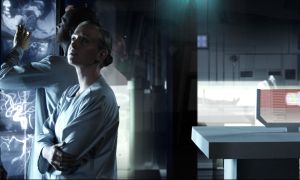
As the final touches to the script were made and members of the crew assembled, important work of pre-visualising the film was started. This meant that tens of concept drawings and paintings had to be produced to get the feel and look of the film right. Concept and Visual Effects artist Juuso Mäkelä and myself started working on the digital paintings and 3D-models to get our heads around the task. Although the process was technically challenging, the hardest part was to find a way to make the world visually captivating in the way that they did not steel the attention from the story. It was a struggle to get things done just right, all the time keeping in mind that everything had to be in sync with the old man trying to remember his late wife.
Casting
We were truly lucky to get 2009 Jussi –award winner Heikki Nousiainen to play the main role. Although the timetables of his other projects were overlapping with his other projects, we managed to find a suitable schedule. We were very happy to get a true grand master of his art to be working with us. One of my own guidelines is that don’t direct if you don’t have to so I casted his wife, actress Eija Nousiainen to play the role of Aleksi’s wife which explains the great chemistry they have on screen. Other roles were also cast with the top Finnish actors such as Jukka-Pekka Palo and Ilkka A. Jokinen. It seemed that it was the script that managed to caught the interest of these highly professional people.
Principal photography
The crew was an interesting mix of traditional filmmakers and people coming from digital graphics world. With a lot of blue- and green screen elements and also shooting with digital RED- format as well as on 16mm film, there were lot of technical aspects to the production process. Making a film with serious dramatic subject, there was not much leeway for ”not making it right”. Everything had to be the same ”high enough” – quality.There were some moments of desperation, as usual, but we managed to get every single shot we wanted. Some of the tough spots were when futuristic props started to come apart on the set, or when the whole crew, already tired from the days work, took part on the set building work, to keep everything in schedule. Many decisions were made to tackle problems in post production. Sometimes because it was the better way, many times because it was the only way. Before starting the production of Memory of Tomorrow I had been working as a visual effects supervisor so I knew it would eventually bite us back in the post and it did, but as a director you don’t want to take shortcuts if you know there is a way to get things done.